 |
ThorVG v1.1
|
|
ThorVG v1.1
|
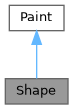
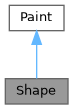
A class representing two-dimensional figures and their properties. More...
#include <thorvg.h>
Public Member Functions | |
| Result | reset () noexcept |
| Resets the shape path. | |
| Result | moveTo (float x, float y) noexcept |
| Sets the initial point of the sub-path. | |
| Result | lineTo (float x, float y) noexcept |
| Adds a new point to the sub-path, which results in drawing a line from the current point to the given end-point. | |
| Result | cubicTo (float cx1, float cy1, float cx2, float cy2, float x, float y) noexcept |
Adds new points to the sub-path, which results in drawing a cubic Bezier curve starting at the current point and ending at the given end-point (x, y) using the control points (cx1, cy1) and (cx2, cy2). | |
| Result | close () noexcept |
| Closes the current sub-path by drawing a line from the current point to the initial point of the sub-path. | |
| Result | appendRect (float x, float y, float w, float h, float rx=0, float ry=0, bool cw=true) noexcept |
| Appends a rectangle to the path. | |
| Result | appendCircle (float cx, float cy, float rx, float ry, bool cw=true) noexcept |
| Appends an ellipse to the path. | |
| Result | appendPath (const PathCommand *cmds, uint32_t cmdCnt, const Point *pts, uint32_t ptsCnt) noexcept |
| Appends a given sub-path to the path. | |
| Result | strokeWidth (float width) noexcept |
| Sets the stroke width for the path. | |
| Result | strokeFill (uint8_t r, uint8_t g, uint8_t b, uint8_t a=255) noexcept |
| Sets the stroke color for the path. | |
| Result | strokeFill (Fill *f) noexcept |
| Sets the gradient fill of the stroke for all of the figures from the path. | |
| Result | strokeDash (const float *dashPattern, uint32_t cnt, float offset=0.0f) noexcept |
| Sets the dash pattern of the stroke. | |
| Result | strokeCap (StrokeCap cap) noexcept |
| Sets the cap style of the stroke in the open sub-paths. | |
| Result | strokeJoin (StrokeJoin join) noexcept |
| Sets the join style for stroked path segments. | |
| Result | strokeMiterlimit (float miterlimit) noexcept |
| Sets the stroke miterlimit. | |
| Result | trimpath (float begin, float end, bool simultaneous=true) noexcept |
| Sets the trim of the shape along the defined path segment, allowing control over which part of the shape is visible. | |
| Result | fill (uint8_t r, uint8_t g, uint8_t b, uint8_t a=255) noexcept |
| Sets the solid color for all of the figures from the path. | |
| Result | fill (Fill *f) noexcept |
| Sets the gradient fill for all of the figures from the path. | |
| Result | fillRule (FillRule r) noexcept |
| Sets the fill rule for the shape. | |
| Result | order (bool strokeFirst) noexcept |
| Sets the rendering order of the stroke and the fill. | |
| Result | path (const PathCommand **cmds, uint32_t *cmdsCnt, const Point **pts, uint32_t *ptsCnt) const noexcept |
| Retrieves the current path data of the shape. | |
| const Fill * | fill () const noexcept |
| Gets the pointer to the gradient fill of the shape. | |
| Result | fill (uint8_t *r, uint8_t *g, uint8_t *b, uint8_t *a=nullptr) const noexcept |
| Gets the solid color of the shape. | |
| FillRule | fillRule () const noexcept |
| Retrieves the current fill rule used by the shape. | |
| float | strokeWidth () const noexcept |
| Gets the stroke width. | |
| Result | strokeFill (uint8_t *r, uint8_t *g, uint8_t *b, uint8_t *a=nullptr) const noexcept |
| Gets the color of the shape's stroke. | |
| const Fill * | strokeFill () const noexcept |
| Gets the pointer to the gradient fill of the stroke. | |
| uint32_t | strokeDash (const float **dashPattern, float *offset=nullptr) const noexcept |
| Gets the dash pattern of the stroke. | |
| StrokeCap | strokeCap () const noexcept |
| Gets the cap style used for stroking the path. | |
| StrokeJoin | strokeJoin () const noexcept |
| Gets the join style value used for stroking the path. | |
| float | strokeMiterlimit () const noexcept |
| Gets the stroke miterlimit. | |
| Type | type () const noexcept override |
| Returns the ID value of this class. | |
 Public Member Functions inherited from Paint Public Member Functions inherited from Paint | |
| const Paint * | parent () const noexcept |
| Retrieves the parent paint object. | |
| Result | visible (bool on) noexcept |
| Sets the visibility of the Paint object. | |
| Result | rotate (float degree) noexcept |
| Sets the angle by which the object is rotated. | |
| Result | scale (float factor) noexcept |
| Sets the scale value of the object. | |
| Result | translate (float x, float y) noexcept |
| Sets the values by which the object is moved in a two-dimensional space. | |
| Result | transform (const Matrix &m) noexcept |
| Sets the matrix of the affine transformation for the object. | |
| Matrix & | transform () noexcept |
| Gets the matrix of the affine transformation of the object. | |
| Result | opacity (uint8_t o) noexcept |
| Sets the opacity of the object. | |
| Result | mask (Paint *target, MaskMethod method) noexcept |
| Sets the masking target object and the masking method. | |
| Result | clip (Shape *clipper) noexcept |
| Clip the drawing region of the paint object. | |
| Result | blend (BlendMethod method) noexcept |
| Sets the blending method for the paint object. | |
| Result | bounds (Point *pt4) noexcept |
| Retrieves the object-oriented bounding box (OBB) of the paint object in canvas space. | |
| Result | bounds (float *x, float *y, float *w, float *h) noexcept |
| Retrieves the axis-aligned bounding box (AABB) of the paint object in canvas space. | |
| TVG_DEPRECATED bool | intersects (int32_t x, int32_t y, int32_t w=1, int32_t h=1) noexcept |
| bool | intersects (int32_t x, int32_t y, int32_t w, int32_t h, bool visibleOnly) noexcept |
| Checks whether a given region intersects the filled area of the paint. | |
| Paint * | duplicate () const noexcept |
| Duplicates the object. | |
| uint8_t | opacity () const noexcept |
| Gets the opacity value of the object. | |
| MaskMethod | mask (const Paint **target) const noexcept |
| Gets the masking target object and the masking method. | |
| Shape * | clip () const noexcept |
| Get the clipper shape of the paint object. | |
| bool | visible () const noexcept |
| Gets the current visibility status of the Paint object. | |
| uint16_t | ref () noexcept |
| Increment the reference count for the Paint instance. | |
| uint16_t | unref (bool free=true) noexcept |
| Decrement the reference count for the Paint instance. | |
| uint16_t | refCnt () const noexcept |
| Retrieve the current reference count of the Paint instance. | |
Static Public Member Functions | |
| static Shape * | gen () noexcept |
| Creates a new Shape object. | |
| Static Public Member Functions inherited from Paint | |
| static void | rel (Paint *paint) noexcept |
| Safely releases a Paint object. | |
Additional Inherited Members | |
| Public Attributes inherited from Paint | |
| uint32_t | id = 0 |
| Unique ID of this instance. | |
A class representing two-dimensional figures and their properties.
A shape has three major properties: shape outline, stroking, filling. The outline in the Shape is retained as the path. Path can be composed by accumulating primitive commands such as moveTo(), lineTo(), cubicTo(), or complete shape interfaces such as appendRect(), appendCircle(), etc. Path can consists of sub-paths. One sub-path is determined by a close command.
The stroke of Shape is an optional property in case the Shape needs to be represented with/without the outline borders. It's efficient since the shape path and the stroking path can be shared with each other. It's also convenient when controlling both in one context.
|
noexcept |
Appends an ellipse to the path.
The position of the ellipse is specified by the coordinates of its center - cx and cy arguments.
The ellipse is treated as a new sub-path - it is not connected with the previous sub-path.
The value of the current point is set to (cx, cy - ry).
| [in] | cx | The horizontal coordinate of the center of the ellipse. |
| [in] | cy | The vertical coordinate of the center of the ellipse. |
| [in] | rx | The x-axis radius of the ellipse. |
| [in] | ry | The y-axis radius of the ellipse. |
| [in] | cw | Specifies the path direction: true for clockwise, false for counterclockwise. |
|
noexcept |
Appends a given sub-path to the path.
The current point value is set to the last point from the sub-path. For each command from the cmds array, an appropriate number of points in pts array should be specified. If the number of points in the pts array is different than the number required by the cmds array, the shape with this sub-path will not be displayed on the screen.
| [in] | cmds | The array of the commands in the sub-path. |
| [in] | cmdCnt | The number of the sub-path's commands. |
| [in] | pts | The array of the two-dimensional points. |
| [in] | ptsCnt | The number of the points in the pts array. |
|
noexcept |
Appends a rectangle to the path.
The rectangle with rounded corners can be achieved by setting non-zero values to rx and ry arguments. The rx and ry values specify the radii of the ellipse defining the rounding of the corners.
The position of the rectangle is specified by the coordinates of its upper-left corner - x and y arguments.
The rectangle is treated as a new sub-path - it is not connected with the previous sub-path.
The value of the current point is set to (x + rx, y) - in case rx is greater than w/2 the current point is set to (x + w/2, y)
| [in] | x | The horizontal coordinate of the upper-left corner of the rectangle. |
| [in] | y | The vertical coordinate of the upper-left corner of the rectangle. |
| [in] | w | The width of the rectangle. |
| [in] | h | The height of the rectangle. |
| [in] | rx | The x-axis radius of the ellipse defining the rounded corners of the rectangle. |
| [in] | ry | The y-axis radius of the ellipse defining the rounded corners of the rectangle. |
| [in] | cw | Specifies the path direction: true for clockwise, false for counterclockwise. |
rx and ry greater than or equal to the half of w and the half of h, respectively, the shape become an ellipse.
|
noexcept |
Closes the current sub-path by drawing a line from the current point to the initial point of the sub-path.
The value of the current point is set to the initial point of the closed sub-path.
|
noexcept |
Adds new points to the sub-path, which results in drawing a cubic Bezier curve starting at the current point and ending at the given end-point (x, y) using the control points (cx1, cy1) and (cx2, cy2).
The value of the current point is set to the given end-point.
| [in] | cx1 | The horizontal coordinate of the 1st control point. |
| [in] | cy1 | The vertical coordinate of the 1st control point. |
| [in] | cx2 | The horizontal coordinate of the 2nd control point. |
| [in] | cy2 | The vertical coordinate of the 2nd control point. |
| [in] | x | The horizontal coordinate of the end-point of the curve. |
| [in] | y | The vertical coordinate of the end-point of the curve. |
|
noexcept |
Gets the pointer to the gradient fill of the shape.
nullptr in case no fill was set. Sets the gradient fill for all of the figures from the path.
The parts of the shape defined as inner are filled.
| [in] | f | The unique pointer to the gradient fill. |
|
noexcept |
Gets the solid color of the shape.
| [out] | r | The red color channel value in the range [0 ~ 255]. |
| [out] | g | The green color channel value in the range [0 ~ 255]. |
| [out] | b | The blue color channel value in the range [0 ~ 255]. |
| [out] | a | The alpha channel value in the range [0 ~ 255], where 0 is completely transparent and 255 is opaque. |
|
noexcept |
Sets the solid color for all of the figures from the path.
The parts of the shape defined as inner are colored.
| [in] | r | The red color channel value in the range [0 ~ 255]. The default value is 0. |
| [in] | g | The green color channel value in the range [0 ~ 255]. The default value is 0. |
| [in] | b | The blue color channel value in the range [0 ~ 255]. The default value is 0. |
| [in] | a | The alpha channel value in the range [0 ~ 255], where 0 is completely transparent and 255 is opaque. The default value is 0. |
|
noexcept |
Retrieves the current fill rule used by the shape.
This function returns the fill rule, which determines how the interior regions of the shape are calculated when it overlaps itself.
Sets the fill rule for the shape.
Specifies how the interior of the shape is determined when its path intersects itself. The default fill rule is FillRule::NonZero.
| [in] | r | The fill rule to apply to the shape. |
|
staticnoexcept |
Creates a new Shape object.
This function allocates and returns a new Shape instance. To properly destroy the Shape object, use Paint::rel().
|
noexcept |
Adds a new point to the sub-path, which results in drawing a line from the current point to the given end-point.
The value of the current point is set to the given end-point.
| [in] | x | The horizontal coordinate of the end-point of the line. |
| [in] | y | The vertical coordinate of the end-point of the line. |
|
noexcept |
Sets the initial point of the sub-path.
The value of the current point is set to the given point.
| [in] | x | The horizontal coordinate of the initial point of the sub-path. |
| [in] | y | The vertical coordinate of the initial point of the sub-path. |
|
noexcept |
Sets the rendering order of the stroke and the fill.
| [in] | strokeFirst | If true the stroke is rendered before the fill, otherwise the stroke is rendered as the second one (the default option). |
|
noexcept |
Retrieves the current path data of the shape.
This function provides access to the shape's path data, including the commands and points that define the path.
| [out] | cmds | Pointer to the array of commands representing the path. Can be nullptr if this information is not needed. |
| [out] | cmdsCnt | Pointer to the variable that receives the number of commands in the cmds array. Can be nullptr if this information is not needed. |
| [out] | pts | Pointer to the array of two-dimensional points that define the path. Can be nullptr if this information is not needed. |
| [out] | ptsCnt | Pointer to the variable that receives the number of points in the pts array. Can be nullptr if this information is not needed. |
|
noexcept |
Resets the shape path.
The transformation matrix, color, fill, and stroke properties are retained.
|
noexcept |
Gets the cap style used for stroking the path.
Sets the cap style of the stroke in the open sub-paths.
| [in] | cap | The cap style value. The default value is StrokeCap::Square. |
|
noexcept |
Gets the dash pattern of the stroke.
| [out] | dashPattern | The pointer to the memory, where the dash pattern array is stored. |
| [out] | offset | The shift of the starting point within the repeating dash pattern. |
dashPattern array.
|
noexcept |
Sets the dash pattern of the stroke.
| [in] | dashPattern | An array of alternating dash and gap lengths. |
| [in] | cnt | The length of the dashPattern array. |
| [in] | offset | The shift of the starting point within the repeating dash pattern, from which the pattern begins to be applied. |
| Result::InvalidArguments | In case dashPattern is nullptr and cnt > 0 or dashPattern is not nullptr and cnt is zero. |
nullptr to dashPattern and zero to cnt. dashPattern less than zero are treated as zero. dashPattern are equal to or less than 0, the dash is ignored. dashPattern contains an odd number of elements, the sequence is repeated in the same order to form an even-length pattern, preserving the alternation of dashes and gaps.
|
noexcept |
Gets the pointer to the gradient fill of the stroke.
nullptr otherwise. Sets the gradient fill of the stroke for all of the figures from the path.
| [in] | f | The gradient fill. |
| Result::InvalidArgument | In case a nullptr is passed as the argument. |
|
noexcept |
Gets the color of the shape's stroke.
| [out] | r | The red color channel value in the range [0 ~ 255]. |
| [out] | g | The green color channel value in the range [0 ~ 255]. |
| [out] | b | The blue color channel value in the range [0 ~ 255]. |
| [out] | a | The alpha channel value in the range [0 ~ 255], where 0 is completely transparent and 255 is opaque. |
|
noexcept |
Sets the stroke color for the path.
This function defines the RGBA color of the stroke applied to all figures in the path object. The stroke color is used when rendering the outline of the path geometry.
| [in] | r | The red color channel value in the range [0 ~ 255]. The default value is 0. |
| [in] | g | The green color channel value in the range [0 ~ 255]. The default value is 0. |
| [in] | b | The blue color channel value in the range [0 ~ 255]. The default value is 0. |
| [in] | a | The alpha channel value in the range [0 ~ 255], where 0 is completely transparent and 255 is opaque. The default value is 0. |
|
noexcept |
Gets the join style value used for stroking the path.
|
noexcept |
Sets the join style for stroked path segments.
The join style is used for joining the two line segment while stroking the path.
| [in] | join | The join style value. The default value is StrokeJoin::Bevel. |
|
noexcept |
Gets the stroke miterlimit.
|
noexcept |
Sets the stroke miterlimit.
| [in] | miterlimit | The miterlimit imposes a limit on the extent of the stroke join, when the StrokeJoin::Miter join style is set. The default value is 4. |
| Result::InvalidArgument | for miterlimit values less than zero. |
|
noexcept |
Gets the stroke width.
|
noexcept |
Sets the stroke width for the path.
This function defines the thickness of the stroke applied to all figures in the path object. A stroke is the outline drawn along the edges of the path's geometry.
| [in] | width | The width of the stroke in pixels. Must be positive value. (The default is 0) |
width 0 disables the stroke.
|
noexcept |
Sets the trim of the shape along the defined path segment, allowing control over which part of the shape is visible.
If the values of the arguments begin and end exceed the 0-1 range, they are wrapped around in a manner similar to angle wrapping, effectively treating the range as circular.
| [in] | begin | Specifies the start of the segment to display along the path. |
| [in] | end | Specifies the end of the segment to display along the path. |
| [in] | simultaneous | Determines how to trim multiple paths within a single shape. If set to true (default), trimming is applied simultaneously to all paths; Otherwise, all paths are treated as a single entity with a combined length equal to the sum of their individual lengths and are trimmed as such. |
 1.9.8
1.9.8